
Industries
Church and Place of Worship Cleaning in Fremont
Church and place of worship cleaning for Fremont-area congregations: sanctuary, fellowship hall, classrooms, nursery, restrooms and kitchen ready for every service and gathering.
Printable checklist
Care for the spaces your community shares
A place of worship welcomes people at their most important moments: weekly services, weddings, funerals, holy days and quiet prayer. Church and place of worship cleaning keeps those spaces ready, with a calm, respectful crew that works around your calendar and follows your guidance in every sacred area.
Fremont holds many traditions. Churches, temples, mosques and gurdwaras across Fremont, Newark, Union City, Hayward and Milpitas share one need: a building ready for the next gathering.
Sanctuary and worship hall
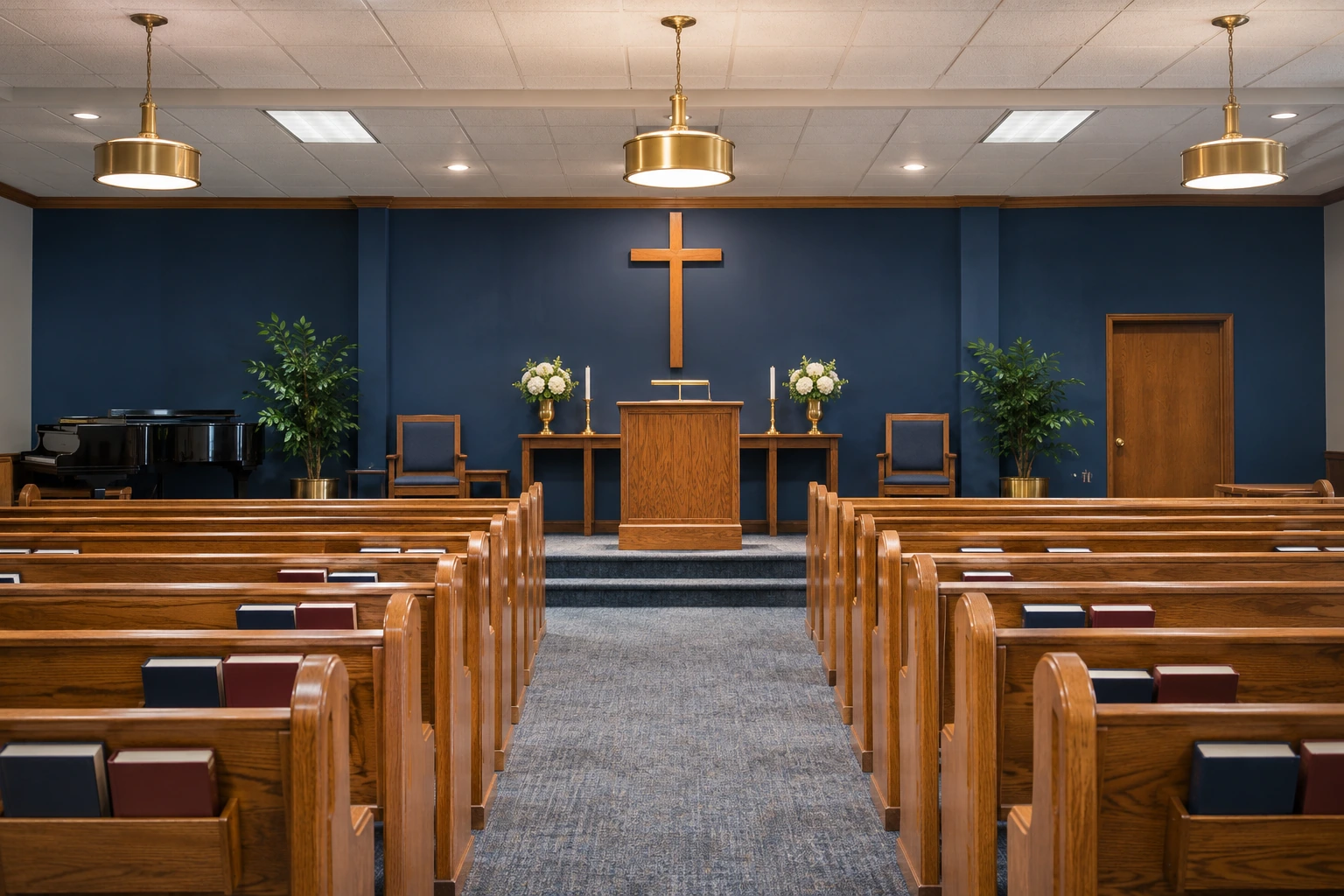
The worship space gets unhurried, careful work. Pews and chairs are dusted and wiped, book and hymnal racks are tidied, and aisles and the floor beneath the seating are cleaned. Carpeted prayer halls are vacuumed edge to edge, and entry doors, glass and the lobby or narthex are finished so the first steps inside feel welcoming.
Altars, pulpits, shrines and other sacred areas are cared for exactly as your clergy and caretakers direct. Some communities ask for dusting and polishing there; others keep those areas for their own members. Nothing sacred is moved or handled without your instruction.
Fellowship hall and kitchen
Halls host potlucks, langar, receptions, youth nights and community meetings, often several in one week. After each event, tables and chairs are wiped and set or stacked the way you want, trash and recycling are cleared, and the floor is swept and washed.
Kitchens that feed large gatherings get counters, sinks, appliance exteriors, cabinet fronts and floors cleaned after use, so volunteers start the next meal in a clean space. Touchpoints across the hall and kitchen can join a regular routine through disinfection and sanitizing.
Classrooms, nursery and youth rooms
Religious education, language classes and youth groups fill classrooms on weekends and weeknights. Tables, chairs, shelves and whiteboards are wiped, and the floors are cleaned once the last class has gone.
The nursery is the room parents check first. Cribs, changing tables, low shelves and toys are cleaned with products your leadership approves, and a congregation that runs a weekday preschool can bring those rooms into the same plan with our school and daycare cleaning.
Restrooms, offices and entries
Restrooms are cleaned and restocked before the main weekly service and after large events, with fixtures, mirrors, partitions and floors done each time. After a festival crowd, a restroom deep clean brings the grout and tile back. Offices, the choir room, the library and meeting rooms join the route on the days they are in use.
Entrances and lobbies pick up dust from the parking lot and courtyard, so mats and the floor just inside the doors get attention every visit. Carpeted sanctuaries and prayer halls stay fresher with periodic commercial carpet cleaning between services, and tile or stone floors can be scrubbed and polished on a quiet weekday.
Around services, holy days and events
Regular visits land on the days before your main services, with a second visit after busy midweek programs when the building needs one. When a Saturday wedding runs into the evening and worship begins Sunday morning, an overnight reset puts the sanctuary, hall and restrooms back in order before the first arrivals.
Holy days bring the biggest crowds: Christmas and Easter, Ramadan and Eid, Diwali, Vaisakhi and the High Holy Days. Extra visits can be scheduled for those weeks, with a deeper clean beforehand so the building looks its best when it is fullest.
Deeper care through the year
Between regular visits, a place of worship benefits from periodic deeper work: high ledges and light fixtures dusted, pews and chair frames detailed, kitchen appliances pulled out and cleaned behind, and hard floors scrubbed and refinished on a floor care schedule of their own. Booking it before your busiest season puts the building at its best for the largest crowds.
Older buildings and historic sanctuaries call for gentle methods on wood, plaster, stained glass frames and stone. Products and tools are chosen for each surface at the walkthrough, and anything fragile or irreplaceable is left for your caretakers. Newer worship centers with gyms, cafes or office wings fold those rooms into the same schedule.
What church cleaning costs
Cleaning a place of worship tends to cost less each month than a workplace of the same size. A place of worship usually needs one or two visits a week instead of five, and the per-foot rate runs at or below office work. Your figure comes from the size of the worship space and hall, the count of restrooms, classrooms and nursery rooms, the kitchen, the floor types and the visits each week.
Event resets, holy-day weeks and overnight weekend turnarounds are priced as additions to the regular plan. Bring your calendar of services and events to the walkthrough, and it becomes a visit schedule and a monthly price.
A few useful answers
Common questions
Can cleaning fit between a Saturday evening event and Sunday morning worship?
Yes. An overnight visit resets the sanctuary, hall and restrooms after the event, so everything is ready before the first service.
Who decides how the altar and other sacred areas are handled?
Your clergy and caretakers do. Crews clean those areas only as you instruct and never move a sacred item.
Can the hall be cleaned after a community meal or langar?
Yes. Tables, chairs, the kitchen and the floor are cleaned after the meal, so the hall is ready for its next use.
Is extra cleaning available for Easter, Eid, Diwali or other holy days?
Yes. Additional visits are scheduled around your holy days, with a deeper clean beforehand for the largest gatherings.
Will the crew stay out of rooms in use for prayer or meetings?
Yes. Crews keep a low profile, skip rooms that are in use and return to them once they are empty.