
Industries
Food Court and Food Hall Cleaning in Fremont
Food court and food hall cleaning in Fremont: seating, tables and trays, condiment and waste stations, restrooms and floors, with day porters through the rush and a deep clean at night.
Printable checklist
Fremont’s food courts
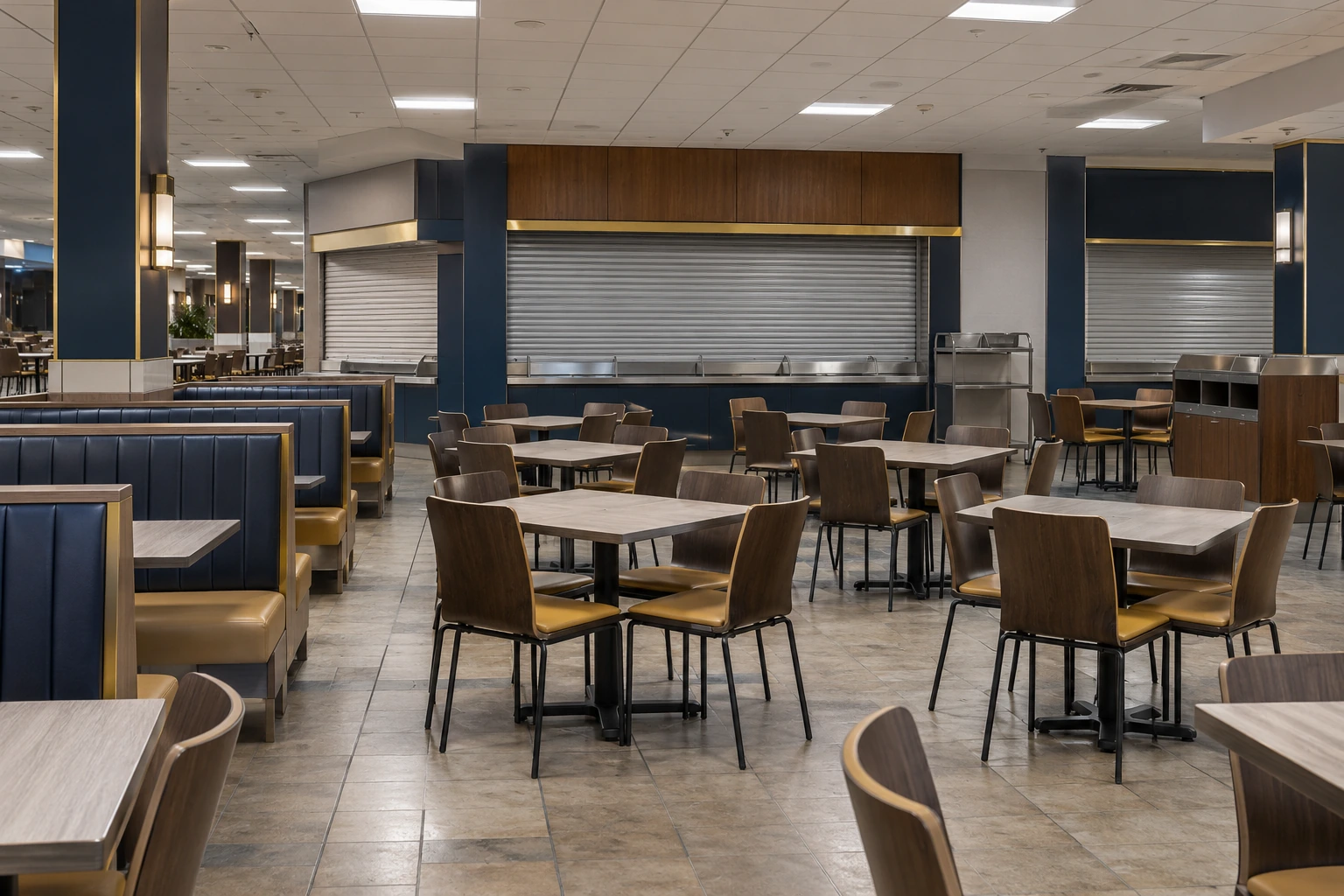
Fremont eats together. The city’s markets and shopping centers include large food courts lined with ramen, rice bowl and tea counters. Food courts like these, inside markets, shopping centers and corporate campuses, pack many vendors around one shared dining room, and the shared room is what every guest remembers.
That shared room belongs to the property, not to any one vendor, and it needs a cleaning plan of its own. Fremont Commercial Cleaning can keep food courts and food halls across Fremont and its neighboring cities clean through the lunch rush and reset them overnight.
Seating, tables and trays
Tables and chairs are the first thing guests touch. During service, porters wipe and sanitize tables as they clear, straighten chairs, pick up dropped napkins and return the room to order between waves of diners. Booths and benches are wiped down, and high chairs are cleaned after each use when the property provides them.
Trays and tray returns get steady attention, since a full return cart signals a neglected room. Porters keep returns cleared, wipe the tray rails and bring clean trays back to the counters that use them.
Condiment, utensil and waste stations
Condiment and utensil stations are the busiest surfaces in the room. Porters wipe drips, refill napkins, straws and utensils where the property supplies them and keep sauce areas tidy. Waste, recycling and compost stations are emptied before they overflow, lids and push plates are wiped and liners are replaced, with sorting signage kept clear and readable.
At night the stations are pulled apart and cleaned completely: cabinets inside and out, the floor beneath them and the wall behind them, so the morning crew opens to a clean dining room.
Restrooms and floors
Food court restrooms take heavy traffic at mealtimes. Porters check them through service, restocking paper and soap and cleaning sinks and counters, and the night crew cleans and disinfects every fixture, partition and floor. A periodic restroom deep clean keeps grout and tile bright.
Spills are handled as soon as they happen, with wet-floor signs set and removed promptly, and the dining floor is dust-mopped through the day. Overnight, hard floors are machine scrubbed and carpeted seating areas are vacuumed, with deeper work scheduled through our commercial floor care service.
Opening and closing routines
A food court is judged in its first and last hour as much as at noon. Before doors open, the porter walks the room, wipes any table the night crew could not reach after a late event, checks every restroom and sets out clean trays. At closing, the porter clears the last tables and stations so the night crew can start deep cleaning right away instead of picking up after the final diners.
Weekends and holidays bring a different crowd, with families staying longer and more spills under the tables. Porter hours can stretch on those days, and the night clean adds extra time for high chairs, booth seating and the floor beneath them.
Day porters during service, deep cleaning at night
A food court needs two kinds of coverage. A day porter works the dining room through service, especially the lunch and dinner peaks and weekend afternoons, keeping tables, stations, restrooms and floors guest-ready. A night crew then deep cleans the whole room after closing, so the porter starts each day from a clean baseline rather than catching up.
Vendor kitchens can be added to the plan on each vendor’s own schedule, covering the cook line, prep areas, walk-ins and kitchen floors. Crews are background-checked, supervisors run quality inspections of the dining room and restrooms and the property manager hears about anything that needs repair.
Food court pricing
Food court cleaning is quoted after a walkthrough. The factors are the size of the dining room and seat count, porter hours per day and per week, the number of restrooms, nightly deep cleaning frequency, floor types and whether any vendor kitchens join the plan. Fremont Commercial Cleaning carries insurance and workers’ compensation, and the property receives a certificate of insurance before service starts.
A few useful answers
Common questions
How many porters does a food court need during lunch?
It follows the seat count and the shape of the rush. One porter through lunch and dinner is a good start, with a second added for weekend peaks once the traffic pattern is clear.
How are spills handled during the rush?
Porters respond right away, set a wet-floor sign, clean and dry the spot and remove the sign once the floor is safe, then return to tables and stations.
Which areas are deep cleaned at night?
Every table and chair, condiment and waste stations taken apart and cleaned, restrooms disinfected top to bottom and hard floors machine scrubbed so the court opens clean.
Are vendor stalls part of the plan?
Yes, whenever you want them, each on its vendor’s own schedule. The shared dining room, stations, restrooms and floors are the core of every food court plan.